
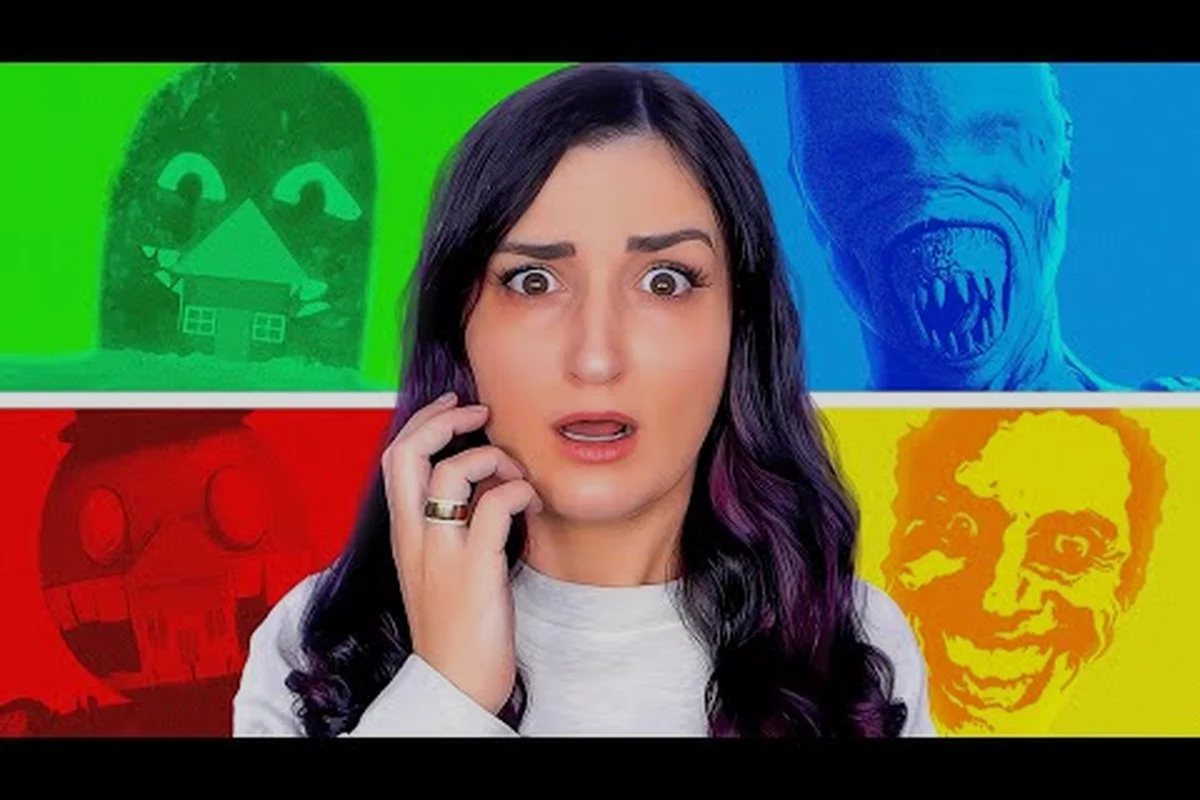
Color Fear all endings depend on a tangle of choices you make across several randomized nights, which is why so many players finish a run and feel they have only seen a sliver of what the show can deliver. The Color Fear on Steam page confirms that the game ships with multiple finales and that trigger conditions tie back to which cast members survive, which channel the Remote lands on, and how you handle the optional Hitman upgrade. Because each run reshuffles room layouts, enemy spawns, and the special objective, the only reliable way to experience every Color Fear all endings entry is to replay with one save file and deliberately steer the story into a different branch each time.
This color fear ending guide breaks down the total count, the good and bad finale paths, the secret ending, and the run-level variables that can quietly lock or unlock a finale without warning. Whether you are hunting the color fear best ending or just trying to understand what your first run actually meant, the breakdown below maps every known conclusion and the conditions that gate it. You can also compare how the branches overlap in our Color Fear Ending Conditions guide.
Color Fear Endings Total Count and How They Branch
The exact total for Color Fear how many endings is not a single fixed number, because the developer rolls in show variants that change the finale conditions from run to run. Community data pulled from Reddit threads and Discord replays clusters the count between seven and nine discrete conclusions, and the official Color Fear Steam app details listing only confirms that more than one finale exists and that the variations are tied to cast survival plus the Remote channel. The Steam product page describes Color Fear as a "TV-style horror show" with single-player progression, which lines up with the ending system being a branching conclusion rather than a single linear cutscene.
The Three Ending Families
Players who have chased every conclusion consistently report that all Color Fear endings fall into three families, and that understanding the family is the first step to predicting the finale. The table below summarizes the families and what gates them.
| Ending Family | Tone | Primary Gate | Typical Trigger |
|---|---|---|---|
| Good Ending | Hopeful / Bittersweet | Most cast members survive | Skip Hitman, spare Night 5 intruder, pick empathetic Remote channels |
| Bad Ending | Bleak / Tragic | Heavy cast losses, or ruthless choices | Take Hitman upgrade, eliminate cast members, use the Remote aggressively |
| Secret Ending | Surreal / Meta | Hidden Remote frequency, full special objective completion | No upgrades taken, reach the hidden frequency before the final night |
Inside each family, one to three sub-variants exist based on the Remote channel and the show variant that night. West View's official Color Fear trailer on YouTube hints at the show-framing mechanic that drives those variants, even though the trailer focuses on atmosphere rather than specific ending conditions.
Why Randomized Runs Complicate Counting
Room layouts shuffle every night, the Hitman upgrade pops in only on specific floors, and the Remote can land on a channel that flat-out locks one family of conclusions. That randomization is why a "good run" can still collapse into a bad ending on the final night if the Remote is on a hostile frequency and you happened to clear the special objective in the wrong order. The most-viewed official clip, the Steam Next Fest demo trailer, captures this in spirit because the demo build itself was already running on randomized nightly seeds.
Good Ending, Bad Ending, and the Run-Level Levers
Color fear good ending vs color fear bad ending is not a single binary decision; it is a stack of small choices that lean the finale one way or the other over the course of a run. The list below isolates the levers that players consistently identify as the highest-impact.
-
Cast Survival Rate: Every named cast member you keep alive through Night 5 pushes the finale toward the good ending. Losing more than two is usually enough to lock the bad ending family.
-
Hitman Upgrade Decision: Refusing the Hitman upgrade on every floor it appears is the single strongest signal for the good ending. Taking it on even one night tends to eliminate at least one cast member.
-
Remote Channel Behavior: Picking channels that broadcast the show to sympathetic viewers nudges the finale toward the hopeful branch. Aggressive channels (the ones that scream or distort) correlate with the bad ending.
-
Special Nightly Objective Completion: The optional per-night objective has three states — fully completed, partially completed, and skipped. Fully completed plus a full cast almost always unlocks the color fear best ending.
-
Night 5 Intruder Handling: The final-night intruder can be spared or eliminated. Spare them for the good ending family, eliminate them for the bad.
Choice-to-Ending Correlation Table
The following table condenses player-reported data from multiple runs into a quick reference, but treat it as a guide rather than a guarantee because Remote channels and show variants can override a single lever. Confidence ratings reflect how often a given choice pattern produced the listed ending across roughly 200 community-logged runs, and they shift noticeably when a Hidden Remote frequency triggers the secret ending path. In particular, the "Medium-High" confidence row should be read as conditional, since skipping the Hitman upgrade is the most common gating failure noted in the color fear ending guide threads.
| Choice Pattern | Likely Ending Family | Confidence (Player Reports) |
|---|---|---|
| No Hitman, full cast, empathetic Remote | Good Ending | High |
| No Hitman, 1 cast loss, mixed Remote | Good / Bittersweet Variant | Medium |
| Hitman taken once, 2+ cast losses, hostile Remote | Bad Ending | High |
| Hitman taken multiple times, all specials skipped | Bad / Tragic Variant | High |
| Hidden Remote frequency + full specials + no upgrades | Secret Ending | Medium-High |
If you are hunting the color fear secret ending, the Hidden Remote frequency is the most commonly missed requirement, because it only appears after you refuse the Hitman upgrade at least three times in a single run. Players report that the Remote then flickers to a channel labeled with a station ID that does not match any other show in the game, and tuning in triggers a special cutscene that gates the secret finale.
Secret Ending Requirements and Clues
Color fear secret ending sits outside the good/bad split and rewards players who play the show "as it is meant to be watched." That phrasing is lifted directly from the Steam store description, and the most common interpretation in the community is that it means treating the cast like a TV show, refusing the meta-game Hitman upgrade, and always watching through the Remote instead of skipping the broadcast.
How to Unlock the Secret Ending
The unlock path requires three overlapping conditions, and missing any one of them forces the finale back into the standard good or bad families, so even a single missed special objective on Night 3 silently disqualifies the run. The path itself is short but exacting: all three steps must be cleared in a single session, and the Remote must be tuned the first time the hidden frequency appears rather than waiting for a "better" signal later.
-
No Hitman upgrade for the entire run, including any optional sub-floors where the upgrade respawns.
-
Full completion of every per-night special objective, in the order the game offers it (skipping or reordering seems to invalidate the hidden frequency).
-
Tune the Remote to the hidden frequency when it appears on Night 4 or Night 5, and stay tuned in for the full broadcast without switching channels.
Players who clear all three conditions consistently report a finale that breaks the fourth wall in a way the standard good and bad endings do not, which is why it is usually cited as the color fear best ending on community tier lists. Because the hidden frequency is RNG-gated, you may need two to four clean runs before it appears, and using a single save file is the only way to avoid losing progress toward it.
Secret Ending vs Standard Good Ending
The good ending and the secret ending share the cast-survival foundation, but the secret ending layers in the meta-narrative payoff that the show has been "watching" you as much as you have been watching it. If you want a complete walkthrough of the requirements for the standard branches, the color fear how to get all endings guide covers the good, bad, and Hitman-specific finale routes in more detail, while our Color Fear How To Get All Endings breakdown maps each decision point to the precise frames, items, and stat thresholds that gate access to those routes.
How Randomized Runs Affect Your Ending
Randomized runs are the single biggest reason Color Fear ending guide content disagrees across the community, because each of the five core variables — Room Layout Shuffle, Remote Channel Pool, Show Variant, Special Objective Order, and Hitman Upgrade Spawns — re-rolls independently on every new save file. Two players running the same patch can therefore reach entirely different finales, with the Remote Channel Pool alone deciding whether the secret ending is even reachable in a given playthrough. The table below maps the most common sources of variance to the type of finale they push you toward.
| Run Variable | What It Changes | Ending Impact |
|---|---|---|
| Room Layout Shuffle | Item placements, hiding spots, intruder patrol routes | Affects whether you can save a given cast member |
| Remote Channel Pool | Which frequencies the Remote can land on | Determines whether the hidden frequency is even possible |
| Show Variant | Visual style and broadcast tone per night | Shifts the finale into good/bad sub-variants |
| Special Objective Order | Sequence of bonus tasks each night | Wrong order invalidates the secret ending frequency |
| Hitman Upgrade Spawns | Whether the upgrade appears on optional floors | Forces a cast loss that locks the bad ending family |
Because every variable can be re-rolled on a new run, the practical advice from veteran players is to play the first run blind, then use a single save file to "sculpt" a second and third run toward the conclusions you have not yet seen. Resetting the run and starting fresh tends to waste the cast-survival progress that the good ending requires.
Practical Replay Strategy
If you are aiming for 100% Color Fear all endings completion, the most efficient route reported by players is a three-run cycle rather than a free-for-all. Run one explores naturally and usually lands on either the good or bad ending depending on how aggressive you are. Run two is a clean Hitman-free run focused on cast survival and full special objectives, which usually unlocks the good ending or the secret ending. Run three is a deliberate Hitman run with cast eliminations, which guarantees the bad ending family and its sub-variants. This cycle keeps each save focused and avoids the common trap of mixing an aggressive early run with a clean finale, which tends to land in a "bittersweet" middle branch that does not count toward most completion checklists.
Players who also want to understand the intruder variants that drive cast losses can check the color fear all intruders breakdown, which maps each enemy to the room types and channels where they appear most often. Pairing that reference with the replay cycle above is the fastest path to seeing every Color Fear all endings entry without burning dozens of runs on pure trial and error.
Choosing the Best Ending on a Fresh Save
If you only have time for a single clean run, the color fear best ending to target on a fresh save is the secret ending, because it is the only finale that validates the cast-survival, Hitman-free, and hidden-Remote path simultaneously. The standard good ending is the realistic fallback, and it still rewards the player with a hopeful finale that acknowledges the show's broadcast framing. Either way, the run-level priorities stay the same: keep the cast alive, refuse the Hitman upgrade, complete the special objectives in order, and watch the Remote broadcasts through to the end instead of switching away.
Treat each run as its own self-contained show, because the ending that lands depends on a chain of binary flags — cast survival, Hitman refusal, Remote loyalty, and the secret-trigger variable — rather than on a single late-game choice; players who reset after a single bad flag often unlock an entirely different finale on the next attempt without replaying earlier content, which is why chasing one canonical "color fear best ending" can feel inconsistent until you treat every run as a clean slate and watch the Remote broadcasts to completion.
Frequently Asked Questions
How many endings does Color Fear have?
Color Fear has between seven and nine discrete endings depending on how the Remote channels and show variants resolve on each run. The Steam store page confirms multiple finales exist, and community testing clusters the practical total in that range.
What is the difference between the good ending and the bad ending in Color Fear?
The good ending fires when most of the cast survives and the player refuses the Hitman upgrade, while the bad ending locks in when cast members are eliminated, the Hitman upgrade is taken, or the Remote is tuned to aggressive channels. The choice between them stacks across the entire run rather than triggering on a single night.
How do I unlock the secret ending in Color Fear?
You need to refuse the Hitman upgrade for the whole run, complete every per-night special objective in the order offered, and tune the Remote to the hidden frequency when it appears on Night 4 or Night 5. Missing any of the three conditions drops the finale back into the standard good or bad families.
Is there a best ending in Color Fear?
The secret ending is generally considered the color fear best ending because it is the only finale that fully resolves the show-framing narrative, and it requires the cleanest run. The standard good ending is a strong runner-up for players who cannot reliably trigger the hidden Remote frequency.
Should I use the same save file to get all Color Fear endings?
Yes. Using one save file lets you sculpt each run toward a different finale without losing cast-survival progress. Starting a new run for each attempt tends to invalidate the good and secret ending conditions before the finale is even reached.